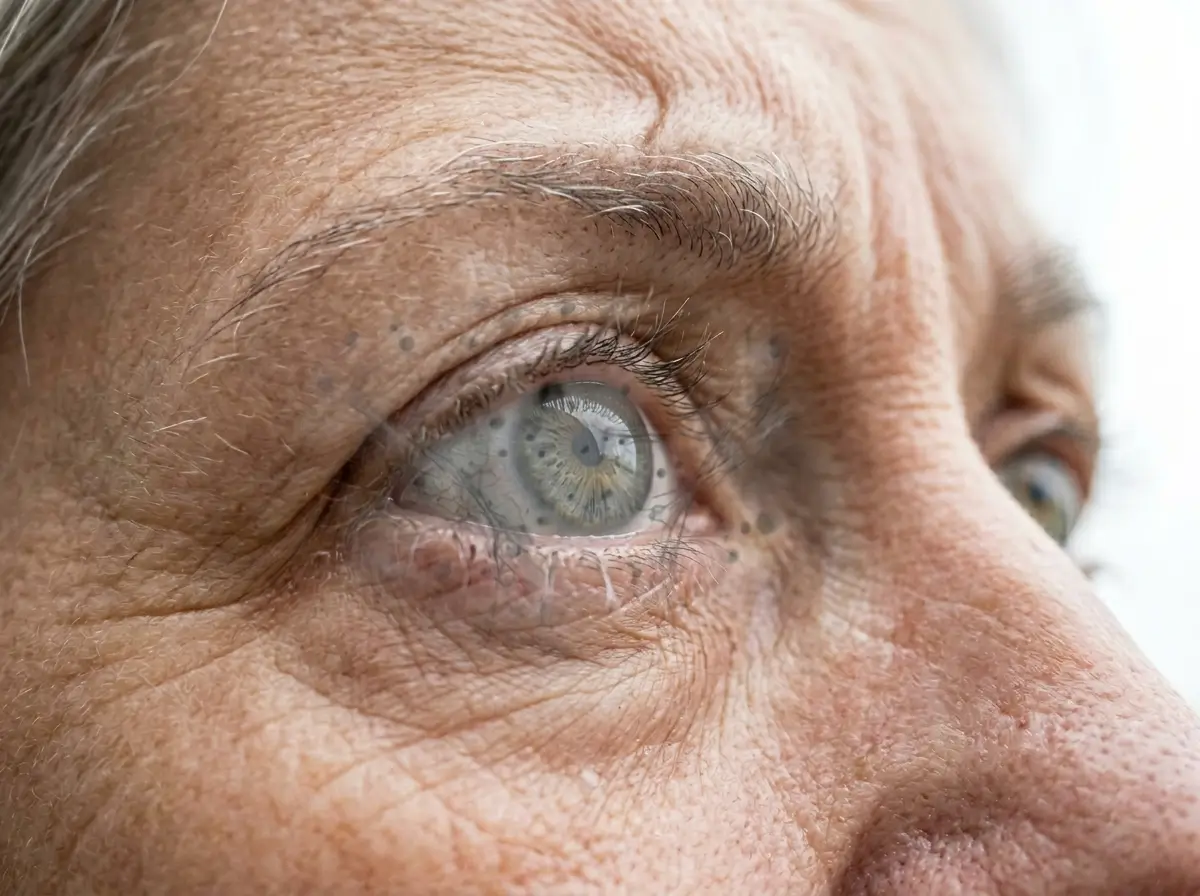
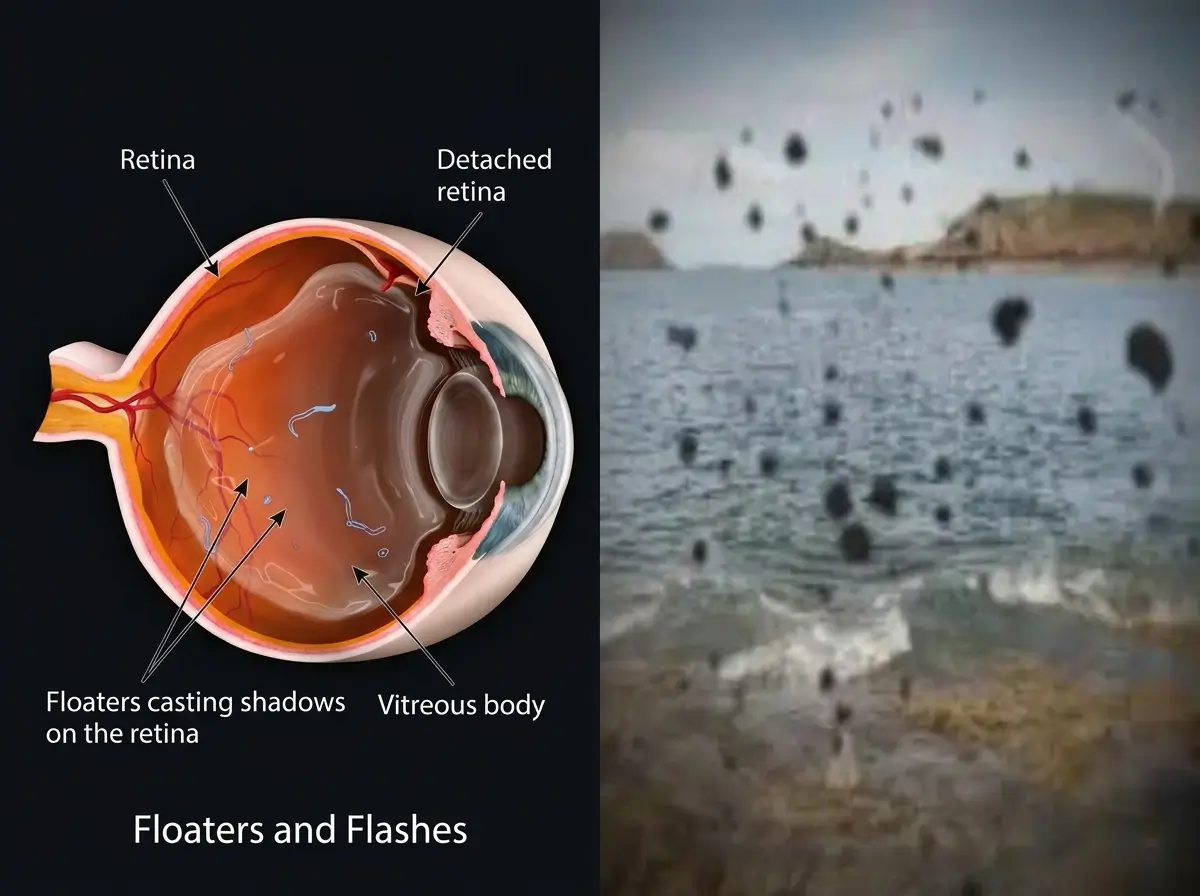

You know the torture. Those black spots. Floating threads. A cobweb drifting across everything you try to focus on. There when you wake up. There when you read. There when you look at the sky.
You went to the doctor. More than once.
"It's normal. It happens with age. Learn to live with it."
So you did. Or you tried.
But here's what no one told you.
The floaters aren't the problem. They're the signal.
What you're actually seeing isn't the floater itself. It's the shadow it casts on your retina. A shadow from something that shouldn't be there — and that your eye no longer has the repair capacity to clear.
And the longer that goes unaddressed, the more the vitreous deteriorates. The more it pulls. The greater the risk of something far more serious than a spot drifting across your screen.
They're what happens when something inside the eye — something your doctor never mentioned — starts to break down. Slowly. Silently. Long before the floaters became impossible to ignore.
Dr. Ming Wang had been practicing ophthalmology for 14 years when he started asking a question most eye doctors never ask: why does this keep getting worse?
Not just the floaters. The vision. The clarity. The slow, steady decline that most people over 50 accept as inevitable.
What he found wasn't in any textbook. It was a cellular mechanism — one that determines not just whether floaters form, but how fast the eye ages overall. How sharp vision stays. How well the eye repairs itself from the inside.
And it had been overlooked. Completely.
The answer wasn't a surgery. Wasn't a laser. Wasn't a prescription. It was something far simpler — a common frozen fruit most people walk past at the grocery store every week.
He's explaining everything.